A Place Setting for Guests Who Have Never Met
A place setting for guests who have never met can make a first shared meal feel relaxed with clear food labels, considerate choices, and easy conversation cues.
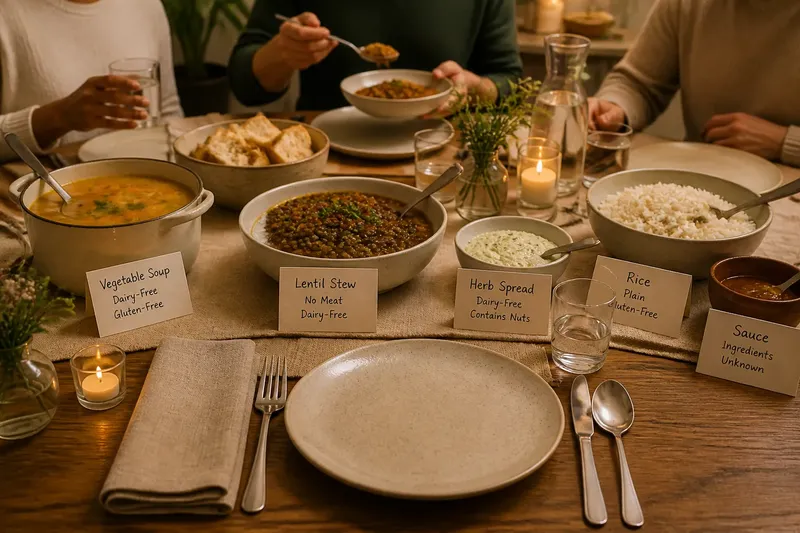
A place setting for guests who have never met can quietly answer a useful question: what is in this dish, and how do I join in? A clear menu, familiar utensils, and a few thoughtful cues help newcomers take part without making dinner feel like an organized mixer.
That starts with more than plates. Food labels, serving utensils, and the way a host introduces the meal can ease uncertainty, especially when guests have different dietary needs or customs. Keep the welcome practical, not theatrical.
What should a place setting for guests who have never met include?
For a casual meal, set out a dinner plate, napkin, drinking glass, and the utensils needed for the food being served. Keep the arrangement consistent so guests can understand it at a glance. A folded napkin beside the plate is just as useful as an elaborate fold.
Think about what people may need to know before they serve themselves. A small card beside a dish can name its main ingredients or identify a common dietary feature, such as containing nuts or being vegetarian. Keep labels brief and accurate; if you are unsure about an ingredient, check the packaging or ask the person who prepared the food.
Say you expect six guests, including one person who has mentioned avoiding dairy. You plan a vegetable soup, bread, and a dairy-free spread, but the bread label is unclear. Check its packaging, set the spread beside its own serving knife, and tell the guest you could not confirm the bread’s ingredients. The observable result is that the guest can make an informed choice without being singled out or asked to trust a guess.
How can hosts make shared food easier to understand?
Give each dish its own serving utensil, especially when ingredients or dietary needs differ. Put a concise label next to unfamiliar dishes, and mention anything that could be easy to miss. Guests can then decide what suits them without having to quiz the cook in front of everyone.
- Check whether a dish contains a common allergen; if the ingredients are confirmed, label it clearly, and if they are uncertain, say so and let guests choose another dish.
- Check whether serving utensils are shared between dishes; if they are, add a separate utensil to each, and if you lack enough, serve the dishes one at a time rather than implying they are separate.
- Check whether a dish’s name or appearance makes its ingredients unclear; if it may be unfamiliar, add a short description, and if the label would be speculative, ask the cook before writing it.
- Check whether a guest has told you about a dietary restriction; if you can verify a suitable option, point it out privately, and if you cannot, explain what you know and avoid promising that a dish is safe.
- Check whether a serving bowl hides its contents; if guests cannot identify the food, add a simple name card, and if the card would not answer the likely question, give a brief spoken explanation.
- Check whether a dish needs an ingredient list to make an informed choice; if the recipe or packaging provides one, make that information available, and if it does not, tell guests what remains unknown.
How can a host introduce food without turning dinner into a lesson?
A sentence or two is usually enough: name the dishes, mention ingredients guests may want to know about, and explain how the meal will be served. If a custom or dish has personal meaning, offer the context only if the person who brought it wants to share. Curiosity works better than putting anyone on the spot.
Food traditions vary within communities and families. Avoid presenting one person’s preference as a rule for everyone who shares a background. If you do not know how a dish is usually eaten, ask its cook or offer it without prescribing a correct response.
It is not worth the effort to create a detailed card for every ingredient in an ordinary meal or to script a question for every guest. Too much explanation can make people feel examined. Share the information that helps them choose and let conversation develop on its own.
What do guests usually ask about a place setting for guests who have never met?
Should you use place cards?
Use them if assigned seats address a real need, such as making a requested accessible seat easy to identify. Otherwise, open seating lets guests choose without implying that the host has arranged a social test.
How should you label a dish?
Use its familiar name and add only details you can confirm, such as a main ingredient or whether it contains meat. If you are uncertain, say what you do not know instead of guessing.
What if a guest asks whether food is safe for them?
Share what you know about ingredients and preparation, but do not promise safety if you cannot verify it. The guest can decide what to eat, and a qualified health professional is the right source for personal medical advice.
How much should you explain about an unfamiliar custom?
Give a short explanation when it helps people participate, then let the person connected to the custom decide whether to say more. Do not ask a guest to speak for an entire culture or community.
How do you respond when a guest’s needs are unclear?
Ask privately and neutrally whether there is anything they need to know about the menu, rather than asking for personal details in front of the group. Keep an alternative dish available when practical, and be candid about ingredients you cannot confirm.
For example, imagine you have a lentil stew, rice, and a packaged sauce whose label is missing. Read the stew recipe and confirm that it contains no meat, set the rice beside it, and leave the sauce separate while telling guests its ingredients are unknown. The resulting choice is clear: guests can take the stew and rice if they suit their needs, or skip the uncertain sauce without asking the table to guess.
The best place setting for guests who have never met makes choices legible while leaving people in control. A plain label, a separate serving spoon, or an honest admission of uncertainty can do more for a welcoming meal than a perfectly coordinated table.