Why Door Handles Signal Which Way to Move
Door handles signal which way to move before you touch the door. Learn how shape, placement, and visibility make an entrance easier to read.
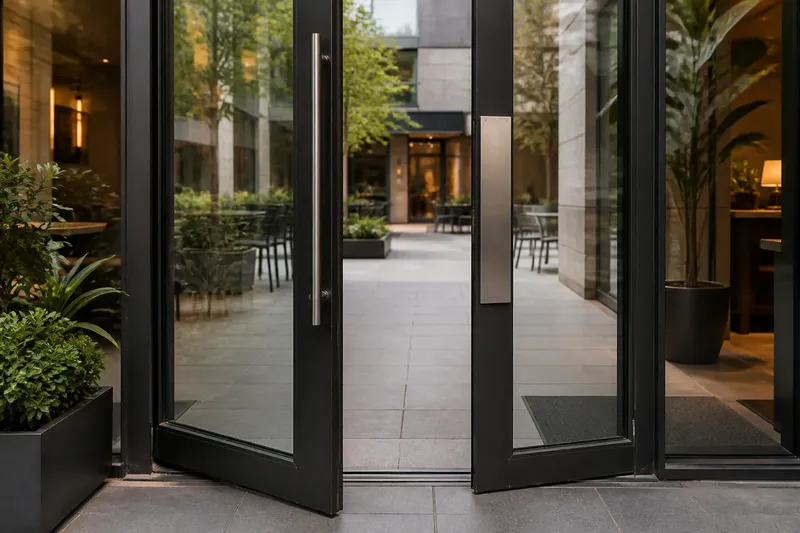
A bar fixed across a door invites a push; a lever or knob invites a hand to pull. Door handles signal which way to move before anyone touches the door, turning a small piece of hardware into a quiet instruction. When that cue matches the door’s movement, people can approach, act, and keep walking without a pause.
The signal is not only the handle’s shape. Its position, orientation, and relationship to the door and its surroundings help make the expected action legible. A handle can be familiar yet misleading if it appears on the side people naturally reach toward, while the door actually swings the other way. Understanding these cues shows why some doors feel effortless and others prompt a hesitant tug.
What does a handle tell your hand?
A handle offers an invitation. A knob gives the hand something to grasp and turn. A lever offers a surface to press down or lift. A flat plate, bar, or recessed pull suggests a different kind of contact: push, pull, or draw a finger into a grip. People read these forms through ordinary experience, often before they consciously identify the hardware.
That quick reading depends on shape and on what the hand can do with it. A projecting grip makes pulling feel available. A broad, flat plate gives the palm a natural place to press. A lever can suggest downward pressure, but it does not by itself say whether the door will swing toward or away from the person using it. The whole arrangement supplies that part of the message.
Handles also differ in how much they ask of the user. A lever is easy to operate with a palm, forearm, or closed fist; a small knob usually asks for a grasp and a twist. The distinction can matter when someone carries a bag, is helping a child, or has limited hand strength. Good cues do not require every visitor to stop and translate an unfamiliar mechanism.
How does placement complete the message?
The handle’s location helps explain where the door moves. On a hinged door, the handle is usually set away from the hinge so the user can move the free edge. This provides leverage and places the hand near the part that travels. The hinge, frame, and visible gap can add clues, though they may be difficult to read at a glance.
Placement also establishes where the user is expected to stand. A pull handle facing an approaching person says, in effect, “take hold here.” A push plate on the same side says “press here.” When both sides use different hardware, the distinction is especially clear: one face may carry a pull, the other a plate suited to pushing.
Now imagine arriving at a door with a long vertical bar on your side and a flat plate on the far side. If the bar is attached where the door’s free edge can swing toward you, it reads as a pull; the plate on the opposite face reads as a push. The expected result is a smooth approach rather than a pull against a door that needs to be pushed. The cues work because each side offers a different action, not because the user has memorized a rule.
Why can a familiar handle still confuse you?
A cue can be familiar and still conflict with the door. A handle that looks like a pull may appear on the push side. A glass door may hide its frame and hinges, leaving the hardware as the clearest clue, yet a slim rail can look decorative rather than usable. A person may then try the most familiar action and meet resistance.
Visual clutter can make the signal harder to pick out. A metal bar against a busy reflection, a small plate beside a large sign, or hardware hidden behind a neighboring object can all weaken the first impression. Lighting and contrast matter because people need to notice the handle before reaching for it. The useful question is not whether the hardware looks attractive on its own, but whether its intended action stands out from the door around it.
Some doors have reasons to look alike on both sides, or to use hardware that does not make the swing obvious. In that case, a short, visible word such as “PUSH” or “PULL” can settle the question. A label is most useful when it sits near the point of action and agrees with the hardware. Decorative wording or a sign placed far from the handle adds another thing to interpret instead of clarifying the movement.
What makes a door cue easy to read?
Several details can help a person understand a door before touching it:
- Match the shape to the action. A pull should provide a grip; a push side should offer a surface suited to pressing.
- Make the hardware visible. Clear contrast against the door helps the handle catch the eye, including on glass or glossy surfaces.
- Keep the cue near the hand. A label or symbol should appear close enough to the handle to connect the instruction with the action.
- Give each side a distinct invitation. Where practical, different hardware can distinguish pushing from pulling without a written prompt.
- Leave the approach unobstructed. Nearby furniture, displays, or stored items should not hide the grip or make it hard to reach.
- Consider different ways of using a hand. A broad plate or lever may be easier to operate than a small knob for someone carrying something or using limited grip.
These are design considerations, not a universal formula. Door type, accessibility needs, and the hardware’s intended use all shape the right choice. For a particular installation, follow the manufacturer’s instructions and any applicable local requirements; where the decision affects access or safety, consult a qualified professional.
Which door-handle questions come up most often?
Does a lever handle tell you whether to push or pull?
Not on its own. A lever tells you where and how to apply force, while its position, the door’s swing, and any nearby label help indicate the direction.
Why do some doors have a plate instead of a handle?
A flat plate gives the palm a clear place to push without suggesting that the door must be grasped. It can make the push side easier to distinguish from a side fitted with a pull.
Do glass doors need different visual cues?
They can, because a clear pane may make the door’s edges and hinges difficult to see. Visible hardware and a nearby sign can help show where the door is and what action it expects.
Is a sign enough if the handle suggests the opposite action?
A sign may help, but conflicting signals still make a door slower to read. The clearer arrangement is one where the label and hardware point toward the same action.
When is more explanation not worth the effort?
A door that already communicates its movement does not need a paragraph of instructions, a decorative icon, and a second sign. Too many cues can compete for attention. If a visitor can identify a usable grip or push surface and understand the likely action at a glance, adding more text may simply clutter the entrance.
It is more useful to correct a mismatch than to explain around it. If the handle invites pulling on the push side, changing the hardware or adding a direct, nearby label addresses the confusion at its source. A small adjustment to visibility or contrast may help too, provided it does not obscure the working parts.
Door handles signal which way to move through a compact exchange between object and body: the shape offers an action, and placement puts that action in context. When the invitation is visible and consistent, the door becomes easier to approach for people who have never used it before. That clarity is most valuable at the moment it is needed—before a hand reaches out.